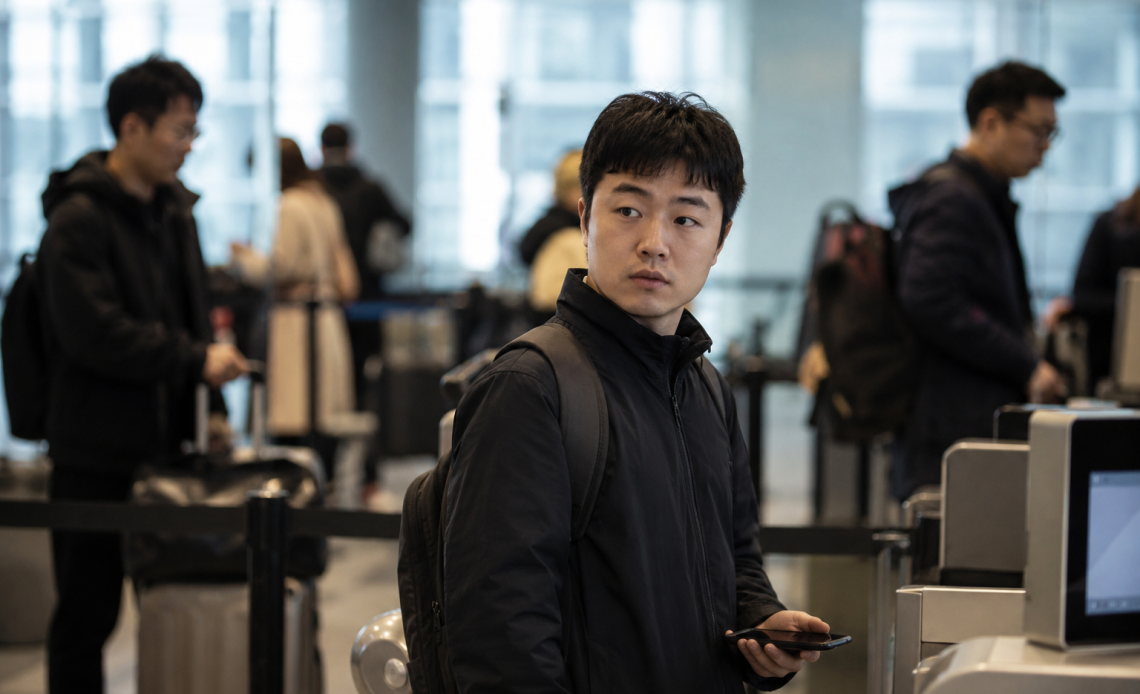
China has begun restricting overseas travel for top artificial intelligence professionals working at private firms, including Alibaba Group Holding and DeepSeek.
The move signals an escalation in Beijing’s efforts to safeguard critical technology and strengthen its position in the global AI race against the US.
Government agencies have started imposing travel restrictions on individuals involved in advanced AI development who are considered strategically important to the country.
Those affected are now required to obtain approval from relevant authorities before travelling overseas.
People familiar with the matter told Bloomberg that restrictions apply to a range of AI professionals, including startup founders, researchers, and senior executives.
Beijing expands controls over the AI sector
China has long maintained travel restrictions on individuals working in strategically important sectors, including university researchers, nuclear scientists, and executives at state-owned enterprises.
However, the latest measures mark a notable expansion into the private technology sector.
In China, it is common for state-owned enterprises to hold the passports of senior executives and Communist Party officials.
What appears unusual in this case is the extension of similar controls to employees and leaders at private companies.
It remains unclear how widely the policy will be implemented across China’s AI industry.
The exact level of seniority targeted and the specific roles that could be included in the future have not yet been determined.
AI talent increasingly viewed as a strategic asset
The measures highlight the growing importance China places on AI expertise as competition with the US intensifies.
Many of China’s leading AI engineers and researchers emerged during the post-ChatGPT boom, largely within the country’s technology giants and private startups.
However, tighter controls on overseas movement could create challenges for Chinese AI firms attempting to recruit and retain top talent.
The restrictions may also increase concerns within the industry over government intervention.
The issue comes as the sector is already responding to Beijing’s demand for Meta Platforms to unwind its reported $2 billion acquisition of Manus, an AI startup that originated in China before relocating to Singapore.
The proposed deal triggered criticism in China over the potential loss of technology and talent overseas.
As part of the response, Beijing moved to limit US investment in sensitive technology companies.
According to reports, authorities also barred two Manus co-founders from leaving the country while regulators investigated the transaction.
Concerns over technology leaks remain central
The Ministry of Industry and Information Technology did not respond to a faxed request for comment.
People familiar with the matter told Bloomberg that the latest travel restrictions are not necessarily directly linked to the Manus case.
However, preventing technology leaks remains a major policy objective for Chinese authorities.
Some AI professionals in China’s private sector had already been required to report overseas travel plans to authorities.
In many cases, though, prior approval was not always necessary before travelling abroad.
Last year, the Wall Street Journal reported that Chinese authorities advised leading AI founders and researchers to avoid visiting the US, although the guidance stopped short of a formal ban.
The tighter restrictions may ultimately force some AI engineers with international ambitions to decide whether to remain in China or pursue opportunities abroad earlier in their careers.
The post Top Chinese AI talent face new overseas travel restrictions appeared first on Invezz