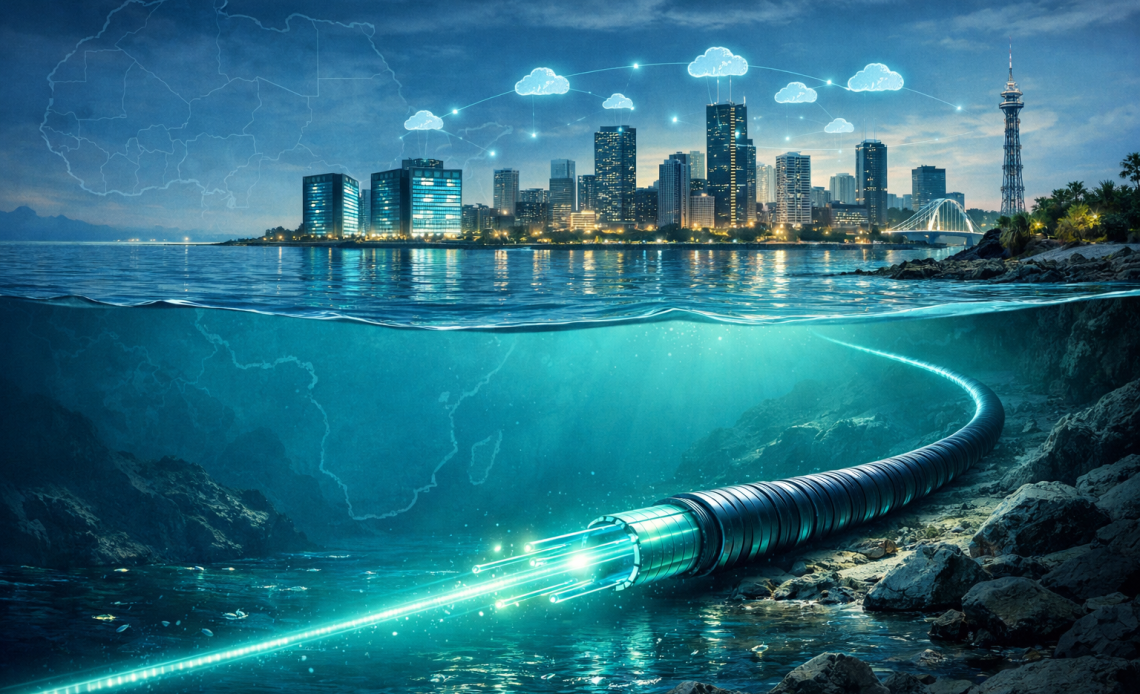
Nigeria is moving closer to securing a new undersea fibre-optic cable as part of efforts to strengthen its digital resilience and reduce the risk of widespread internet disruptions.
The West African nation is in advanced discussions with Alphabet Inc.’s Google, according to a Bloomberg report.
The talks come as African countries face repeated internet outages linked to damaged subsea cables, while demand for data, cloud services, and advanced technologies continues to rise.
For Nigeria, Africa’s most populous country, diversifying connectivity routes is increasingly seen as critical to economic activity, digital services, and ambitions to become a regional technology hub.
Connectivity risk in West Africa
Nigeria currently depends on undersea cables that largely follow the same geographic routes to Europe.
This concentration has heightened concerns over vulnerability, as faults along a single corridor can disrupt services nationwide.
The government wants to add new capacity along different paths to reduce this exposure and ensure greater stability for businesses, public services, and consumers that rely on constant connectivity.
Across Africa, subsea cable damage has triggered repeated outages in recent years, affecting banking, communications, and online services.
These disruptions have highlighted the fragility of existing infrastructure at a time when internet usage is accelerating across the continent.
A Google spokesperson confirmed discussions with Nigeria are at an advanced stage, though no further details were disclosed.
The potential cable would complement Google’s broader push to expand digital infrastructure across Africa.
In September, the company told Bloomberg it plans to establish four new infrastructure hubs on the continent.
These hubs are intended to connect its latest underwater fibre-optic cables and improve network performance for African users.
Nigeria’s talks align with that wider strategy, positioning the country as a key node in future connectivity plans.
Infrastructure push beyond cables
Nigeria’s ambitions extend beyond adding another undersea link. The government is also seeking increased investment in digital infrastructure to improve access to reliable cloud services and computing power.
Such capacity is increasingly necessary to support the adoption of advanced tools, including artificial intelligence, across sectors ranging from finance to public administration.
Officials say Nigeria is engaging with other global technology companies alongside Google, signalling a broader effort to attract private investment into its digital ecosystem.
Improved infrastructure could support startups, data centres, and regional service providers, while also strengthening resilience against external shocks.
Regional hub ambitions
With Africa’s fast-growing population and expanding digital economy, Nigeria aims to position itself as a regional digital hub.
Stronger connectivity is seen as foundational to that goal, enabling cross-border services and supporting economic activity across West Africa.
The push comes as competition intensifies among African countries to host data infrastructure and capture the benefits of the AI-driven economy.
Reliable internet access and diversified cable routes are increasingly viewed as strategic assets, not just technical upgrades.
The post Nigeria seeks new Google subsea cable to strengthen digital resilience appeared first on Invezz