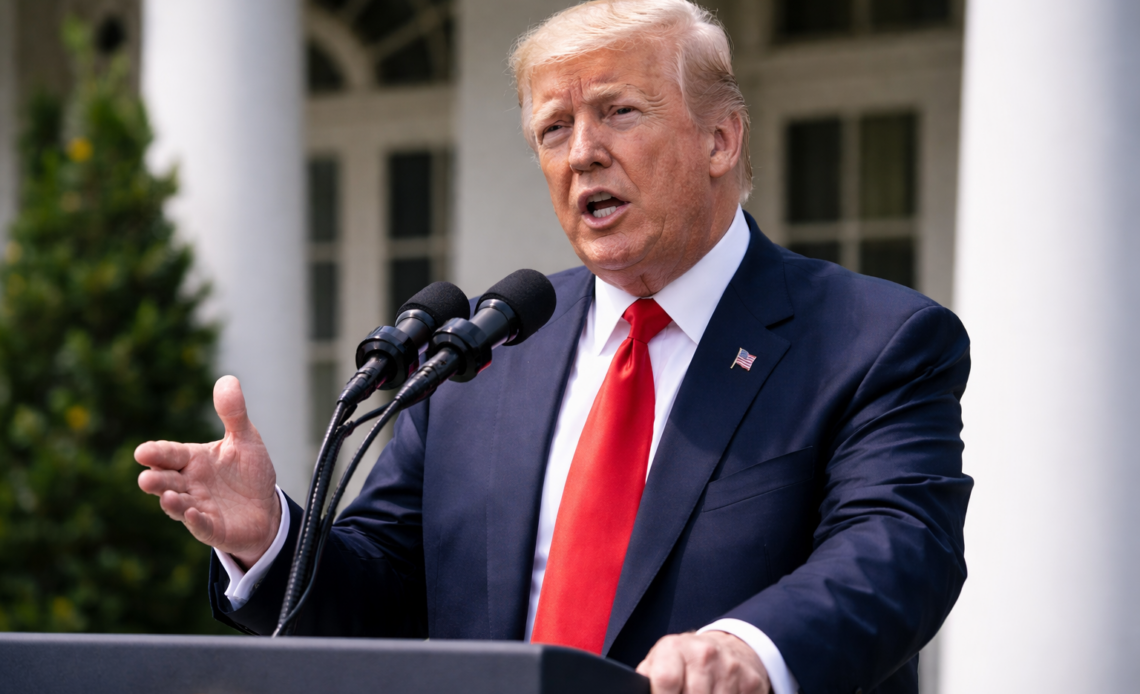
The US government has returned about $100 billion to businesses that paid Donald Trump’s “Liberation Day” tariffs.
The amount includes duties and interest and covers more than half of the roughly $166 billion collected under tariffs later rejected by the Supreme Court.
Customs had accepted $128.68 billion of potential and certified refunds for processing by July 31.
Of the $28.7 billion not yet completed, $1.6 billion is being held because importers have not supplied valid banking information.
Why the government is returning the money
Trump introduced the broad duties in 2025 under the International Emergency Economic Powers Act, or IEEPA, arguing that persistent trade deficits and drug trafficking constituted national emergencies.
The law gave the president wide authority to regulate economic transactions during a crisis, but it did not expressly mention tariffs.
The Supreme Court resolved that dispute on February 20. In a 6-3 judgment, the justices held that IEEPA did not authorise the president to impose tariffs.
The ruling was narrower than declaring presidential tariffs generally unconstitutional as it found that the administration had used a statute that did not grant the power it claimed.
The Court of International Trade subsequently directed US Customs and Border Protection to process refunds.
Customs built a dedicated system known as CAPE to check declarations, remove eligible IEEPA duties and send certified amounts to the Treasury.
Why consumers may not receive a refund
The repayment does not automatically go to shoppers who faced higher prices.
Customs sends the money to the importer of record, or an authorised designee, provided that party has registered a US bank account with the agency.
That distinction matters because the company importing an item may not be the retailer, marketplace seller or customer that ultimately absorbed the cost.
Large importers are therefore positioned to receive much of the money. Smaller businesses that shipped through brokers or logistics groups may first need to establish who appeared on the customs entry.
Companies can use the refunds to rebuild cash reserves, reduce debt or offset earlier costs.
The customs process does not generally require them to cut prices retrospectively or compensate customers, although individual businesses can choose to pass money on.
The repayments will also remove revenue previously booked by the government and add interest costs to the final bill.
Why Trump’s tariff programme is not over
The Supreme Court ruling removed IEEPA as a route for sweeping tariffs, but it did not eliminate the government’s ability to impose duties under other laws.
The administration has already turned to Section 301 of the Trade Act for tariffs of 10% to 12.5% on imports from 60 economies, citing failures to restrict goods linked to forced labour.
USTR says the measures followed investigations, consultations, hearings and thousands of public comments.
Those tariffs now face lawsuits from 25 states and several businesses.
New York Law School professor Barry Appleton sees Section 301 as a stronger legal foundation because presidents have used it before and Congress built in a formal process.
The dispute will instead centre on whether the administration followed those safeguards and justified action against each economy.
The post Trump’s $100 billon tariff refund may leave consumers paying the final bill appeared first on Invezz